

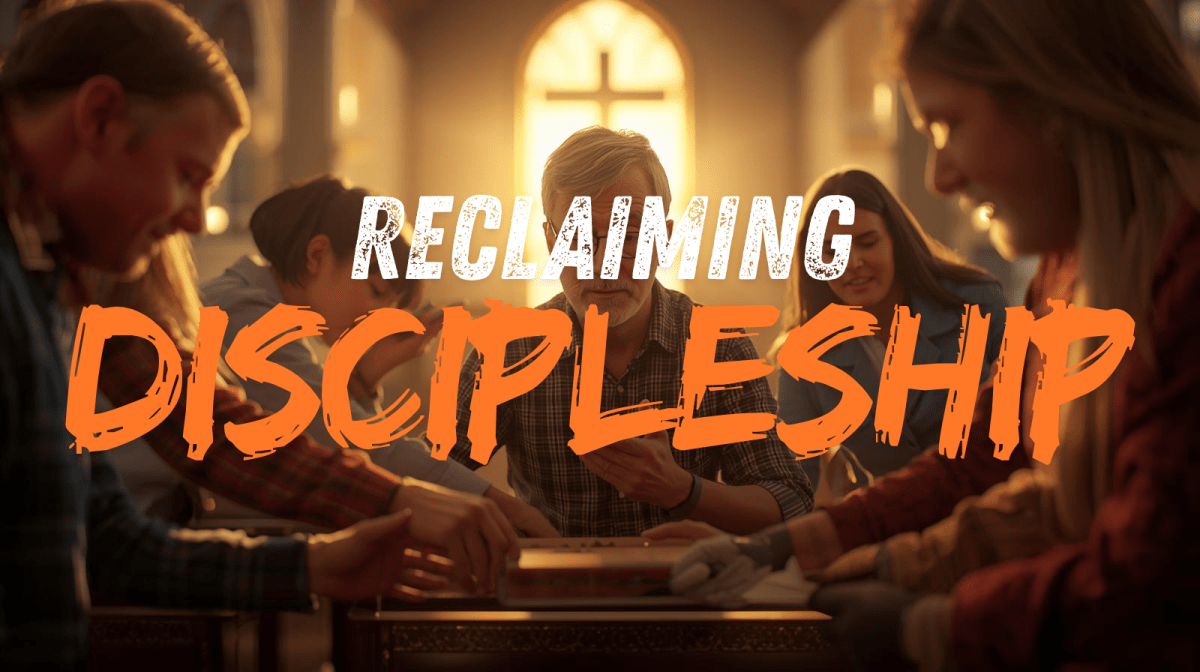
In many churches today, discipleship has quietly drifted into something passive. People attend services, consume teachings, share Christian content online—and call that “following Jesus.” But biblically, discipleship was never about spectatorship. It was a call to work.
Jesus did not say, “Follow Me and be inspired.”
He said, “Follow Me, and I will make you fishers of men” (Matthew 4:19).
The call to follow Christ is inseparable from the call to labor in His purpose.
1. The Call of Jesus Is Always a Call to Assignment
When Jesus called His disciples, He immediately connected identity with function. To follow Him meant to be reshaped into someone who carries responsibility for others. Discipleship is not merely about personal growth; it is about being formed into a worker in God’s field.
The Great Commission confirms this:
“Go therefore and make disciples of all nations…” (Matthew 28:19)
A disciple is not only someone being discipled, but someone being prepared to disciple others. If following Jesus is not producing obedience and responsibility, something is missing in how discipleship is being taught.
2. Formation Happens Through Obedient Labor, Not Observation
Jesus trained His disciples in real life. He sent them to preach, heal, confront darkness, and depend on God (Luke 10:1–3). They learned the Kingdom by participating in it. Discipleship is apprenticeship, not classroom theory.
Much of this work happens unseen:
- learning to obey when it costs comfort
- practicing faithfulness in small assignments
- serving without recognition
- dying to pride and independence
Before public fruit, there is private formation. God shapes workers in hidden places long before He trusts them with visible influence.
3. Grace Does Not Cancel Work — It Empowers It
Some misunderstand grace as exemption from effort. But Scripture teaches the opposite:
“By the grace of God I am what I am… yet not I, but the grace of God that was with me” (1 Corinthians 15:10)
Grace does not replace labor; it fuels it. Grace empowers obedience, endurance, discipline, and faithfulness. A grace message that produces passivity is not biblical grace—it is distortion.
Disciples work not to earn God’s love, but because they have received it.
4. Responsibility Is the Mark of Maturity
Jesus measured discipleship by fruit, not by attendance or knowledge:
“By this My Father is glorified, that you bear much fruit, and so prove to be My disciples” (John 15:8)
Fruit is evidence of internal transformation expressed through outward obedience. A disciple who refuses responsibility remains spiritually immature, regardless of how long they have been in church.
God entrusts more to those who prove faithful with what they already have (Matthew 25:14–30). Discipleship includes stewardship of time, gifts, truth, and influence. Neglect is not neutral; it is disobedience.
5. The Kingdom Advances Through Workers, Not Spectators
Jesus described the harvest as plentiful but the workers as few (Matthew 9:37). The problem was never lack of need, nor lack of opportunity—it was lack of willing laborers.
The Kingdom of God moves forward through disciples who embrace responsibility:
- praying when it is inconvenient
- serving when it is unseen
- standing for truth when it is costly
- carrying people when they are weak
Discipleship that does not produce workers produces consumers. And a church full of consumers will always struggle to fulfill the mission of Christ.
Conclusion: Followership Without Obedience Is Not Discipleship
Discipleship is not a spiritual lifestyle brand. It is a call to submit, to learn, to serve, and to labor in God’s purpose. Jesus calls people to follow Him into a life of obedient work that reflects the Father’s will on earth.
Discipleship without work becomes theory.
Work without discipleship becomes religion.
But true discipleship forms obedient workers who carry Christ’s life into the world.
Reflection Questions
Use these questions personally or in a small group. Don’t rush them. Let them confront comfort and produce clarity.
- How has my understanding of discipleship been shaped more by church culture than by Jesus’ actual call?
(Compare your current lifestyle with Matthew 4:19 and Matthew 28:19–20.) - In what concrete ways am I presently “working” in obedience to Christ?
Not activity—obedience. Where has Jesus actually sent you? - Where have I become passive, comfortable, or overly consumer-oriented in my faith?
Be honest. Comfort is often the enemy of growth. - What assignment or area of responsibility have I been avoiding because it feels costly, inconvenient, or exposing?
- What fruit is my discipleship currently producing in my character and in the lives of others?
If the fruit is unclear, the formation is likely unclear as well. - Who am I intentionally helping to grow in Christ right now?
Disciples make disciples. If the answer is “no one,” that is a discipleship gap, not just a scheduling issue.
Activation Prayer (Personal or Corporate)
Father,
I bring my discipleship before You honestly.
Expose where I have reduced following Jesus to comfort, routine, or consumption.
Deliver me from passive Christianity and from hiding behind spiritual language without obedience.
Form in me the heart of a worker, not a spectator.
Train my hands for service, my mind for obedience, and my heart for faithfulness.
Where I have delayed assignments, I repent.
Where I have resisted responsibility, I yield.
Align my will with Your will.
Send me where You want me to serve.
Entrust me with what You can trust me to carry.
Produce fruit in me that remains—fruit in character, obedience, and impact.
I choose followership that works, obeys, and bears fruit.
In Jesus’ name, amen.
Practical Engagement
One practical step this week:
Write down one clear act of obedience you know God has already asked of you but you have delayed. Do it within the next 72 hours. Discipleship becomes real when obedience becomes concrete. Share it with your accountability head.
 The Anointed Scribe’s Lamp