

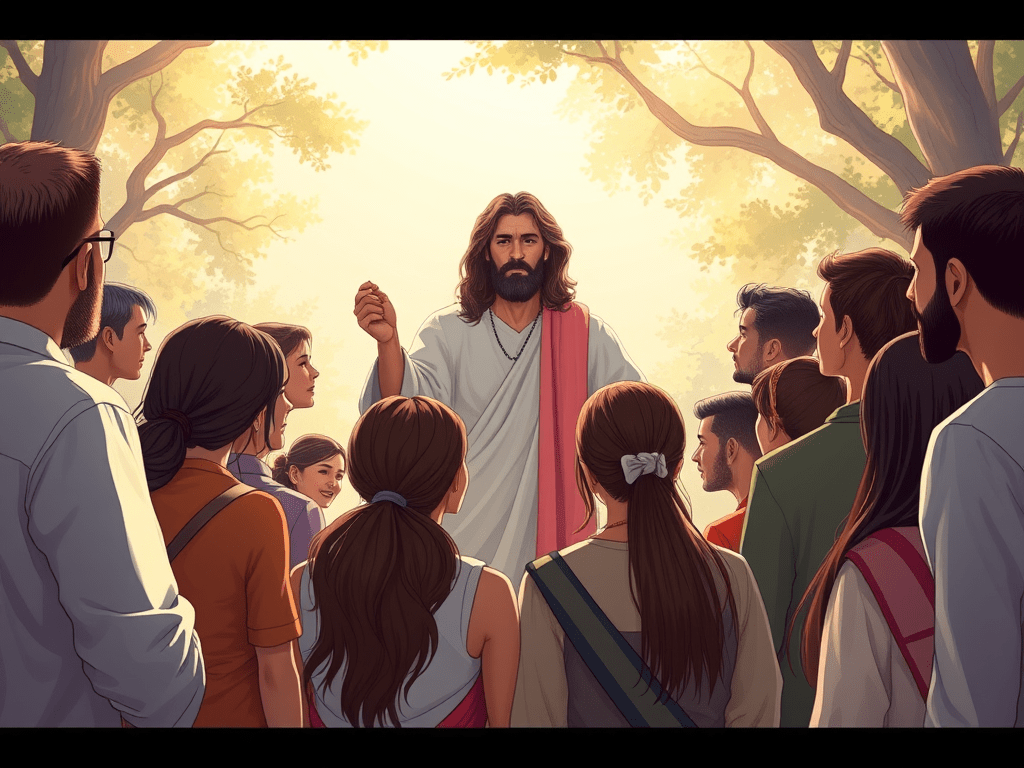
“Then Jesus came to them and said, ‘All authority in heaven and on earth has been given to me. Therefore, go and make disciples of all nations…’” Matthew 28:18-19
Discipleship is not merely a Christian concept; it is the heartbeat of the Kingdom of God. When Jesus rose from the dead, His final command to His followers was not to build churches, amass followers, or pursue spiritual celebrity. It was simple yet radical: Make disciples.
Why? Because discipleship is God’s ordained method for transforming lives, nations, and the world.
1. The Authority Behind the Call (Matthew 28:18–20)
Jesus’ commission to make disciples is not a suggestion; it is a command issued under the full weight of His authority; “All authority in heaven and on earth has been given to me.” This sets the tone: discipleship is not an option for believers; it is our weapon of our making, our mission, our mandate, and our means of multiplying the Kingdom one soul after another.
Discipleship is not just about conversions; it is about teaching obedience, baptizing into identity, and living with a daily awareness that Christ is with us “to the very end of the age.”
“Teaching them to obey everything I have commanded you…” Matthew 28:20
Discipleship is not a program. It is not limited to Sunday services or Bible knowledge. Discipleship is a lifestyle, a total-life transformation. The goal of discipleship is not just to fill churches, but to form Christ in people until every area of their lives reflects His nature, character, and priorities.
This is Holistic discipleship, the kind that doesn’t just teach people what to believe, but how to live as followers of Jesus in every domain of life.
2. The Cost of Discipleship (Luke 14:26–27, 33; Luke 9:23; Mark 8:34)
Jesus never sugarcoated the journey of discipleship. He laid out its cost in stark terms:
- “Whoever does not carry their cross and follow me cannot be my disciple.”
- “Those of you who do not give up everything you have cannot be my disciples.”
- “Deny yourself, take up your cross daily, and follow me.”
Discipleship is costly; it will cost you your comfort, your ambitions, your possessions, and sometimes even your relationships. But what we give up is nothing compared to what we gain: Christ Himself.
The measurement of your generosity becomes the measurement of your return. Luke 6:38b TPT
The cross is not just a symbol of pain; it is the instrument of death to self. Daily cross-bearing is about dying to our own will so that the will of God can live through us in every area of our lives
Making disciples is not a casual Christian activity; it is a costly commitment. When Jesus gave the Great Commission, He was not calling His followers to an easy path, but to a life of sacrifice, service, and suffering for the sake of others. The making of disciples is a spiritual labor that demands more than good intentions, it requires laying down one’s life daily.
Paul wrote, “We loved you so much that we were delighted to share with you not only the gospel of God but our lives as well” (1 Thessalonians 2:8). Making disciples requires being present, not only in meetings but in real-life moments of crisis, celebration, correction, and encouragement, as they go through their own life journey with God
Disciple-makers model surrender, teaching not just by word but by example.
To make disciples is to sometimes be misunderstood, criticized, or even rejected, especially when calling others into uncomfortable truth. Jesus Himself was despised and rejected (Isaiah 53:3). Paul wrote, “We are fools for Christ’s sake…we are dishonored” (1 Corinthians 4:10). A disciple-maker cannot seek the approval of man and of God at the same time (Galatians 1:10).
Discipleship involves opening your life to others, your failures, your weaknesses, your victories, and your faith journey. It means allowing others to see you grow and struggle, which takes humility. Like Jesus, who lived openly among His disciples, disciple-makers become transparent and vulnerable so others may learn not just doctrine but life.
Disciple-makers often face spiritual opposition, emotional fatigue, and even betrayal. Yet they continue, for the joy set before them—just as Jesus endured the cross (Hebrews 12:2).
“We always carry around in our body the death of Jesus, so that the life of Jesus may also be revealed in our body… So then, death is at work in us, but life is at work in you.” 2 Corinthians 4:10–12
Disciple-makers often “die daily” so that life can be formed in those they mentor.
Discipleship is not an emotional altar call; it is a deliberate decision. Jesus compares it to building a tower or preparing for war: both require strategy, sacrifice, and counting the cost.
“This person began to build and wasn’t able to finish…”
Too many start the Christian journey without considering the long road of surrender it entails. Christ doesn’t just want your Sunday; He wants your life.
3. The Identity of a Disciple (John 8:31; John 13:34–35)
Jesus gave clear criteria for identifying true disciples:
- Abiding in His Word: “If you hold to my teaching, you are really my disciples.”
A disciple is not just someone who listens, they remain, obey, and live out Jesus’ teachings. - Loving as He Loved: “By this everyone will know that you are my disciples, if you love one another.”
Discipleship is far from being passive, nor a one-time transaction. It is active and continuous. True discipleship is proven in sacrificial love, not in theological arguments or church attendance. Love is the badge of genuine disciples.
4. Discipleship Demands Priority (Luke 14:26; Matthew 16:24)
Jesus shocked the crowd when He said:
“If anyone comes to me and does not hate father and mother, wife and children… even their own life, such a person cannot be my disciple.”
Jesus was not advocating literal hatred but rather making a point about ultimate allegiance. No relationship, possession, or dream should compete with our love for Him. To be His disciple, we must put Him first, above all.
Discipleship is not about your leader; it is about Christ. It’s not about looking like your leader, it’s about looking like Christ Jesus, and if your leader is also a disciple of Christ, then you both will look like Christ, and all glory to Him alone
5. Discipleship is a Call to Transformation
Discipleship is not a class or a curriculum, it is a life impartation. Through discipleship:
- Lives are transformed
- Character is shaped
- Legacy is established
- The Kingdom is advanced
A true disciple does not merely know what Jesus taught; they become like Him.
Spiritual Formation: Deepening the Inner Life
At its core, discipleship is a spiritual journey, growing in intimacy with Jesus, obedience to the Word, and dependence on the Holy Spirit. This includes:
- Consistent time in the Word and prayer
- Living by the Spirit (Galatians 5:25)
- Growing in the fruit of the Spirit
- Living a life of worship, not just on Sundays, but every day
Holistic discipleship begins with the heart. When the heart is transformed, life will follow.
Emotional and Mental Maturity: Renewing the Mind
“Be transformed by the renewing of your mind…” Romans 12:2
Many disciples know Bible verses but are bound by fear, anger, anxiety, or trauma. A true disciple must grow emotionally and mentally, learning how to process emotions, confront lies, and live from a renewed mind.
- Healing from past wounds
- Learning emotional intelligence
- Managing thoughts and temptations
- Cultivating peace, joy, and self-control
A disciple is not spiritually mature if they are emotionally unhealthy. Jesus transforms the soul, not just the spirit.
Relational Integrity: Reflecting Christ in Community
“By this everyone will know that you are my disciples, if you love one another.” John 13:35
Our discipleship must show up in how we treat people:
- Honoring our parents and family (Ephesians 6:1–3)
- Walking in forgiveness and reconciliation
- Pursuing purity in friendships and marriage
- Serving in humility and generosity
Holistic discipleship equips us to be Christlike in our marriages, parenting, friendships, and even in difficult relationships.
Vocational Excellence: Representing Christ in Work
Discipleship doesn’t stop at church doors — it follows us into the workplace, schools, and businesses. A disciple of Jesus is a faithful steward in every assignment.
“Whatever you do, work at it with all your heart, as working for the Lord…” Colossians 3:23
Holistic discipleship develops:
- Strong work ethic and integrity
- Vision for purpose and calling
- Bold witness for Christ in the marketplace
- Excellence and diligence in every task
Our jobs are platforms for mission. Our careers are stages for God’s glory.
Physical Stewardship: Honoring God with the Body
Our bodies are temples of the Holy Spirit (1 Corinthians 6:19–20). Discipleship includes:
- Healthy habits
- Rest and sabbath
- Self-discipline
- Avoiding addictions and harmful patterns
Neglecting the body can hinder spiritual effectiveness. Holistic discipleship teaches us to care for the vessel so it can carry the vision.
Missionary Lifestyle: Advancing the Kingdom
Disciples are not consumers of church, but carriers of the Kingdom. Holistic discipleship releases believers into:
- Evangelism and soul-winning
- Making other disciples (2 Timothy 2:2)
- Community engagement and justice
- Missions, generosity, and sacrificial service
A discipled life is a sent life, one that lives with eternal purpose and global impact.
Financial Discipleship: Kingdom Stewardship
Jesus spoke often about money. Discipleship must address how we handle resources:
- Giving generously and sacrificially
- Budgeting wisely
- Avoiding debt and greed
- Trusting God as Provider
Money reveals the heart (Matthew 6:21). A disciple must learn to live with Kingdom values over materialism.
6. Discipleship Multiplies the Kingdom
When one life is truly discipled, the impact multiplies. Disciples make other disciples, this is the power of spiritual reproduction.
Jesus began with twelve ordinary men. Through discipleship, they turned the world upside down (Acts 17:6). The strategy has not changed. Programs may fail. Buildings may crumble. But disciples make history.
Final Charge: Be One. Make One.
If you want to change the world, become a disciple of Jesus. Then go and make disciples.
- Follow Him radically.
- Love others sacrificially.
- Teach what He taught.
- Live what you preach.
And remember His promise:
“Surely I am with you always, to the very end of the age.” (Matthew 28:20)
This is the power of discipleship, the power to be transformed and to transform others for eternity.
Are You Ready to Start Your Journey of Discipleship?
Discipleship is not about perfection; it’s about pursuit. It’s not about having all the answers, but about surrendering to the One who does. Jesus is calling you, not just to believe in Him, but to follow Him, daily, deeply, and completely.
So the question is:
Are you ready to start your journey of discipleship, to lay down your will, pick up your cross, and walk with Jesus into the life He destined for you?
He’s waiting. Let’s walk with Him.
 The Anointed Scribe’s Lamp